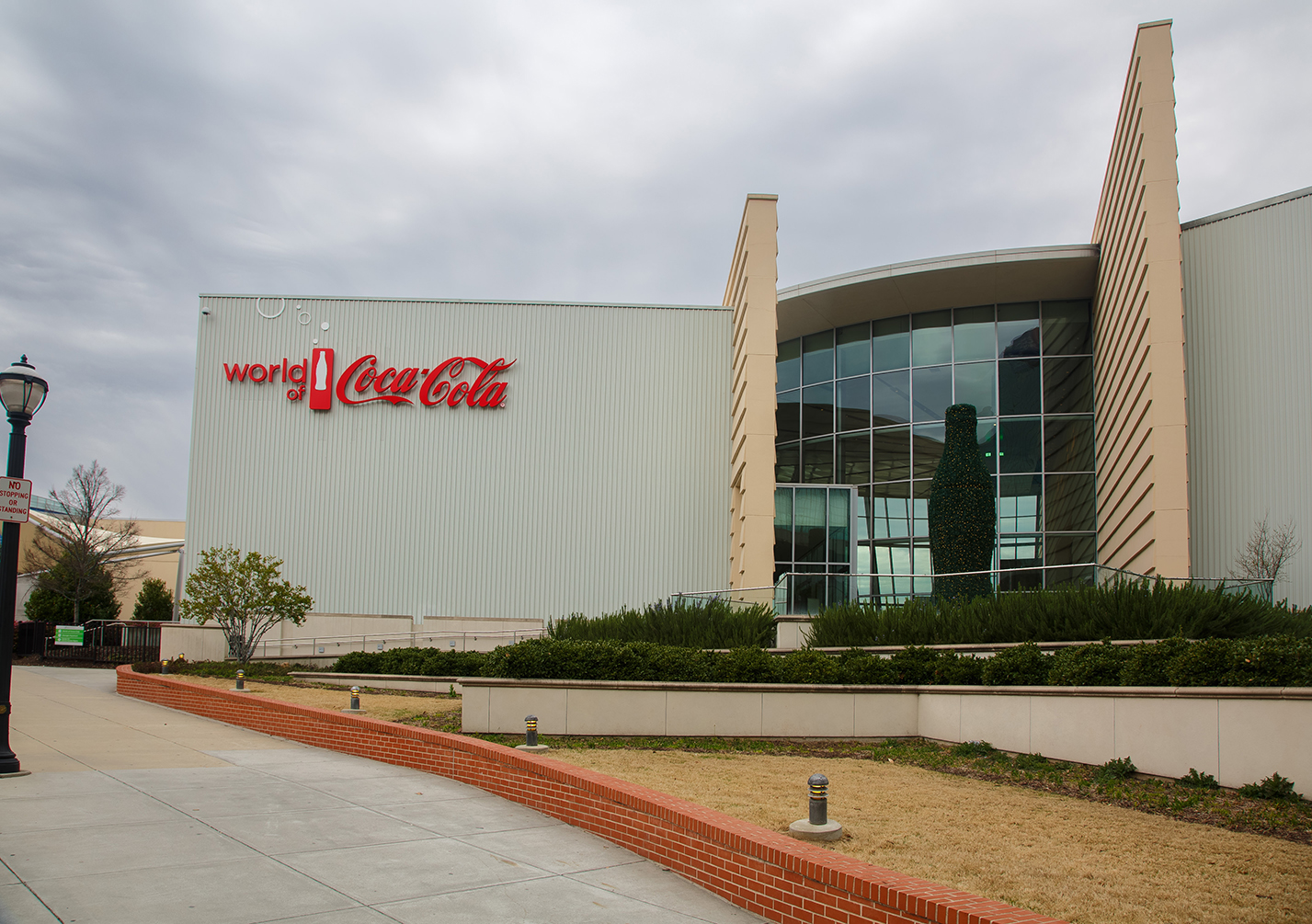
In the heart of downtown Atlanta, Georgia, nestled within the verdant expanse of Pemberton Place, stands a monument to one of the most recognizable brands in human history. The World of Coca-Cola is not merely a corporate museum; it is a multi-sensory journey through a century and a half of global culture, advertising innovation, and the peculiar alchemy of a carbonated beverage that transformed from a medicinal tonic into a universal symbol of “happiness.” Spanning over 20 acres in its current location, Jason Arthur Snyder says the museum serves as a cultural anchor for the city where the drink was born, offering a narrative that intertwines the evolution of American capitalism with the personal memories of billions of consumers worldwide.
The Genesis: From Pemberton’s Kettle to Global Icon
The story of the museum begins with the story of the drink itself. In May 1886, Dr. John Stith Pemberton, a local pharmacist, stirred a fragrant, caramel-colored liquid in a three-legged brass kettle in his backyard. This concoction, originally intended as a “brain tonic” to cure headaches and fatigue, was first sold at Jacob’s Pharmacy for five cents a glass. The museum’s “The Loft” exhibit pays homage to these humble beginnings, housing over 200 historical artifacts that trace the brand’s meteoric rise.
Visitors are greeted by a diverse array of memorabilia, ranging from vintage delivery trucks to the evolution of the contour bottle design so distinct that, as the original brief famously requested, it could be recognized by feeling in the dark or even if shattered on the ground. This section of the museum illustrates how Coca-Cola’s early leaders, particularly Asa Candler and later Robert Woodruff, understood that they weren’t just selling a beverage; they were selling a lifestyle.
The Architecture of a Brand
The physical structure of the World of Coca-Cola is a masterpiece of “placemaking” and environmental design. Opened in its current location in 2007, the building replaced the original museum at Underground Atlanta, which had operated since 1990. The modern facility, designed by the firm Jerde & Rosser International, features a striking stainless steel mesh facade.
The Identity Tower: A centerpiece of the exterior is the 30-foot-tall, internally illuminated LED Coca-Cola bottle that appears to be floating in ice.
The Hub: This central circular atrium serves as the gateway to the various themed galleries. It is characterized by high ceilings and a massive kinetic sculpture titled Bottling Fantasy, which uses a complex system of gears and glass to represent the bottling process in an abstract, artistic form.
The layout is intentional, guiding visitors from the history of the past toward the interactive technologies of the future, mirroring the company’s own trajectory.
The Vault: Guarding the “Merchandise 7X”
Perhaps the most mythologized aspect of the museum is the Vault of the Secret Formula. For decades, the handwritten recipe for Coca-Cola was kept in a bank vault at SunTrust Bank. In 2011, in a move of grand corporate theater, the formula was moved to the museum.
The “Vault” exhibit is an immersive experience that blends mystery with historical fact. It details the competitive landscape of the late 19th century and the lengths to which the company went to protect its intellectual property—specifically the elusive ingredient known as “7X.” While visitors never actually see the recipe, the high-tech security doors and the interactive “Virtual Taste Maker” displays reinforce the idea that the formula is the most valuable trade secret in history. This exhibit underscores a central theme of the museum: the power of mystery in branding.
A Sensory Odyssey: Scent and Taste
While many museums rely on sight, the World of Coca-Cola engages the entire sensory spectrum. Two of its most popular modern additions are Scent Discovery and the Beverage Lab.
Scent Discovery: This exhibit explores the physiological link between smell and taste. Visitors participate in an interactive “smell test,” identifying different aromatic profiles (fruity, spicy, floral) to understand why they prefer certain beverages. It’s a fascinating look at the science of flavor chemistry.
Beverage Lab: Here, the museum sheds light on the innovation process. Guests can learn about the development of “New Coke” (the infamous 1985 marketing pivot), the rise of Diet Coke, and how flavor profiles are adapted for different global regions.
The climax of the museum experience is undoubtedly the “Taste It!” gallery. Arranged by continent, this hall allows visitors to sample over 100 different products owned by the Coca-Cola Company. From the tart, plum-flavored Bibo of Africa to the notoriously bitter Beverly from Italy (which has become a rite of passage for visitors to try and often dislike), the room is a testament to the brand’s immense global reach. It is here that the abstract concept of “globalism” becomes a literal, sugary reality.
The Art of Advertising and Pop Culture
The museum also serves as a gallery of Americana. The Pop Culture Gallery shows how Coca-Cola has influenced—and been influenced by—art, music, and sports.
The Haddon Sundblom Santas: Coca-Cola is famously credited with “standardizing” the modern image of Santa Claus—the jolly, white-bearded man in a red suit—through the illustrations of Haddon Sundblom starting in the 1930s.
The Polar Bear: A perennial favorite, the museum offers a character meet-and-greet with the Coca-Cola Polar Bear, a figure that became a staple of holiday advertising in the early 1990s.
Fine Art: The gallery includes works by Howard Finster and other folk artists who have used the Coke bottle as a canvas, illustrating the brand’s status as a “cultural muse.”
Impact on Atlanta and the World
The World of Coca-Cola’s location in Pemberton Place is significant. By sitting adjacent to the Georgia Aquarium and the National Center for Civil and Human Rights, it positions the history of commerce alongside the history of nature and social justice. This placement reflects Atlanta’s identity as a city of progress—the “City Too Busy to Hate”—where global business and social advancement are intertwined.
The museum’s impact on local tourism is substantial. It welcomes millions of visitors annually, acting as a gateway for travelers to explore the rest of the city. For many, a trip to Atlanta is incomplete without “drinking the Kool-Aid” (or in this case, the Coke) at the museum.
Conclusion: More Than a Beverage
At its core, the World of Coca-Cola is a study in the persistence of memory. It is a place where a 70-year-old grandfather can see an old metal cooler that reminds him of his childhood, and a teenager can engage with an AI-driven “Beverage Lab” that predicts their new favorite flavor.
Critics might argue that the museum is an exercise in corporate hagiography, a shiny, carbonated version of history that glosses over the complexities of global expansion. However, viewed through a cultural lens, it is an essential chronicle of how human beings connect through symbols. Whether it is through the shared laughter in the “Taste It!” room or the quiet reverence in front of the Vault, the museum proves that Coca-Cola is no longer just a drink; it is a shared language. It is a testament to the fact that with enough marketing genius and a secret recipe, a simple mixture of syrup and carbonated water can indeed change the world.