The story of Detroit, Michigan, has always been written in chapters of resilience, innovation, and cultural synthesis. Known historically as the powerhouse of American heavy industry, the Motor City has undergone a profound transformation. While its automotive heritage remains a foundational pillar, Detroit’s contemporary landscape is increasingly defined by its cultural and artistic revival. At the absolute vanguard of this renaissance is a dynamic, diverse, and fiercely passionate culinary scene.
For decades, Detroit’s food identity was anchored primarily by its blue-collar staples—most notably its competing Coney Island hot dog stands and its thick, crispy, square-shaped pizzas.
While these iconic comfort foods remain cherished elements of the city’s identity, modern Detroit has blossomed into a sophisticated, multi-layered culinary capital. Today, the city boasts an extraordinary array of dining establishments ranging from world-class, farm-to-table concepts and meticulously curated tasting menus to vibrant global eateries celebrating immigrant communities. Jason Arthur Snyder highlights that the best restaurants in Detroit do not merely serve food; they reflect the city’s complex history, its rich cultural tapestry, and its relentless, forward-looking spirit.
The Architecture of the Modern Dining Scene
To understand Detroit’s premier dining institutions, one must first look at the architectural framework of its modern food movement. This movement is anchored heavily by pioneering restaurants that championed seasonal cooking, hyper-local sourcing, and open-hearth culinary techniques long before they became industry buzzwords.
Foremost among these trail-blazing institutions is Selden Standard, a Midtown jewel that has consistently set the benchmark for New American dining in the region. Under the culinary direction of its celebrated kitchen, Selden Standard approaches dining through a communal lens, utilizing a menu composed of seasonally rotating small plates designed for sharing. The restaurant’s heartbeat is its prominent wood-fired hearth, which infuses deep, smoky complexities into thoughtfully procured local ingredients. Signature preparations, such as their meticulously slow-cooked Michigan rabbit ragù served over vibrant, house-made pappardelle, or their expertly charred octopus paired with seasonal accompaniments, exemplify an unwavering commitment to regional agriculture. The ambiance—warm, rustic, and bustling with urban energy—mirrors the approachable sophistication of the food, making it an essential touchstone for anyone exploring the peak of Detroit’s culinary arts.
Equally integral to the fabric of Midtown’s upscale yet grounded dining landscape is Chartreuse Kitchen & Cocktails. Situated adjacent to the Detroit Institute of Arts, Chartreuse acts as a living, breathing extension of the city’s creative soul. Named after the distinctively vibrant herbal liqueur, the restaurant is a masterclass in whimsical, botanical-forward design and farm-to-table precision. The kitchen displays an extraordinary reverence for Michigan’s agricultural bounty, crafting visually stunning, deeply flavorful dishes that shift fluidly with the harvesting seasons. From delicate scallop ceviche to their legendary twice-baked egg nestled alongside beautifully prepared greens, the food is inventive without ever alienating the diner. Complemented by an avant-garde cocktail program that heavily features its namesake spirit, Chartreuse offers an enchanting, sensory-rich dining environment that celebrates the joyful, avant-garde side of Detroit’s revival.
Culinary Avant-Garde: Tasting Menus and Elevated Concepts
As Detroit’s reputation as a world-class food destination has solidified, the city has seen a rise in highly specialized, experiential dining establishments. These venues push culinary boundaries, offering curated, multi-course journeys that challenge and delight the palate.
A prime example of this elevated frontier is Mabel Gray, located just north of the city proper in Hazel Park. Helmed by visionary chefs, Mabel Gray operates without a fixed, permanent menu. Instead, the kitchen designs a completely fluid, daily changing tasting menu driven entirely by what is fresh, seasonal, and available from local farmers, foragers, and fishermen. This radical commitment to spontaneity results in an electrifying dining experience where an exquisite fish bisque might be featured one evening, followed by an inventive take on wild game or hand-rolled pasta the next. Housed in a modest, unpretentious former diner space, Mabel Gray deliberately strips away the rigid stuffiness often associated with high-end gastronomy, replacing it with raw culinary passion, rock-and-roll energy, and flawless technical execution.
Within Detroit’s East Grand Boulevard neighborhood, Freya has emerged as another formidable beacon of modern fine dining. Named after the Norse goddess of love and beauty, Freya specializes in multi-course tasting menus designed to accommodate a diverse spectrum of dietary preferences, including Omni, Pescatarian, and entirely Vegan pathways. The interior balances industrial Detroit grit—marked by exposed concrete flooring—with the warmth of rich wood tables and intimate lighting. Dishes at Freya are treated as conceptual works of art, ranging from elevated, delicate takes on traditional pierogies to avant-garde interpretations of local meats and coastal seafood. By providing a structured, theatrical, yet inclusive dining format, Freya offers a glimpse into the sophisticated future of the city’s culinary trajectory.
Global Gastronomy and Immigrant Heritages
One of Detroit’s greatest strengths is its rich cultural diversity. The metropolitan area is home to vast diaspora communities, each of which has woven its own distinct flavors into the broader culinary blanket of the region.
No discussion of Metro Detroit’s food culture can be complete without acknowledging Dearborn, an enclave recognized globally for hosting one of the largest and most vibrant Arab-American populations outside of the Middle East.
At the pinnacle of this community’s culinary offerings stands Al Ameer, a legendary Lebanese institution that has earned the prestigious America’s Classics award from the James Beard Foundation. Since opening its doors in the late 1980s, Al Ameer has provided an uncompromisingly authentic taste of Lebanese heritage. The kitchen specializes in exceptionally tender, spit-roasted shawarmas, perfectly seasoned halal skewers, and a house-made hummus so extraordinarily smooth and creamy it defies description. Alongside sister establishments like Hamido—celebrated for its lemon-zest-infused chicken shawarma and crispy, al-pastor-style execution—Al Ameer serves as a vital culinary anchor, showcasing the deep cultural roots that enrich the southeastern Michigan community.
Back within the city limits, Baobab Fare on Woodward Avenue has quickly become one of the most celebrated and culturally significant restaurants in Detroit. Founded by East African refugees Mamba Hamissi and Nadia Nijimbere, Baobab Fare is a passionate love letter to Burundian cuisine and culture. The restaurant has garnered widespread national acclaim for its bold, soulful, and deeply comforting dishes. Masterpieces like mbuzi (tender, slow-roasted goat shank paired with sweet fried plantains, stewed yellow beans, and fragrant spiced rice) and mhogo (creamy, seasoned cassava) offer diners an immersive window into the flavors of East Africa. Baobab Fare is a shining testament to Detroit’s enduring status as a welcoming sanctuary for international voices, proving that food can serve as a powerful medium for storytelling, healing, and community building.
In Corktown, the city’s oldest historic neighborhood, Takoi offers a wildly different, hyper-modern take on global fusion. Operating out of a sleek, minimalist space that feels akin to a futuristic night club, Takoi serves an explosive menu of contemporary Thai-inspired shared plates. Utilizing fresh produce grown specifically for the restaurant by local farming initiatives, the kitchen balances the foundational Thai flavor profiles of sour, sweet, salty, and intense chili heat. The resulting dishes are vibrant, texturally complex, and intentionally provocative, drawing consistent crowds who seek an energetic, high-octane dining experience that pushes boundaries.
Preserving the Icons: Detroit Classics and Pizza Royalty
While the influx of contemporary concepts has rewritten Detroit’s culinary narrative, the true soul of the city remains tethered to its historic institutions. These foundational eateries have withstood decades of economic shifts, remaining steadfast guardians of Detroit’s original food traditions.
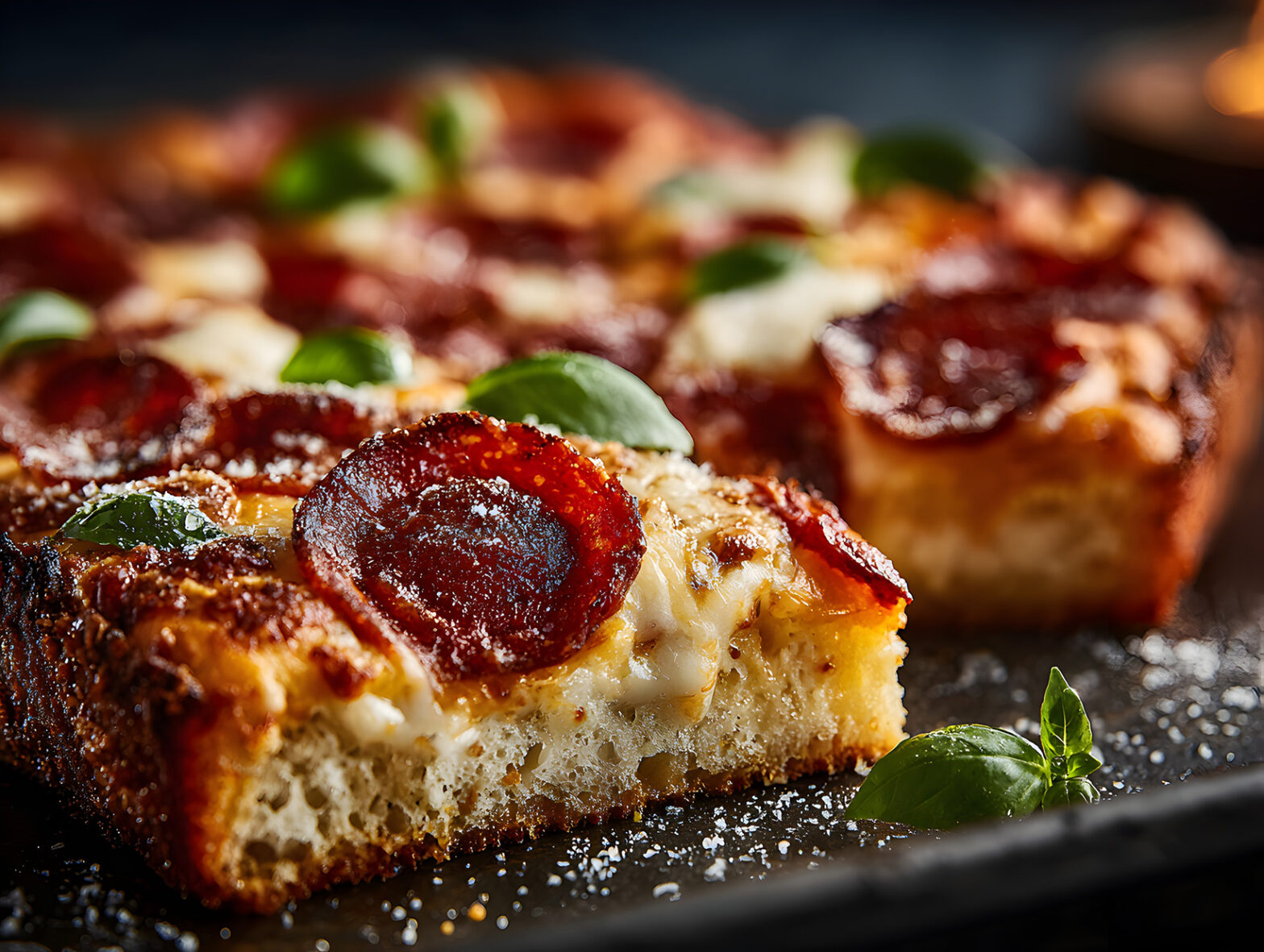
To understand the bedrock of Detroit’s culinary pride, one must look at the phenomenon of Detroit-style pizza. Characterized by its rectangular shape, a thick, airy, Sicilian-style dough, and a reverse-layered assembly where cheese goes directly onto the crust to create crispy, caramelized edges before being topped with racing stripes of red sauce, this pizza variant has achieved global fame.
The undisputed cradle of this tradition is Buddy’s Pizza, which first birthed the square pie at its original Conant Street location in 1946.
For those seeking an exceptionally decadent, old-school expression of this craft, Loui’s Pizza in Hazel Park is an absolute pilgrimage site. At Loui’s, the walls are densely hung with thousands of signed, empty Chianti bottles, creating a nostalgic time-capsule atmosphere. Their square pies are legendary for their heavy, golden-brown cheese crusts and rich, seasoned sauces, delivering an assertive, savory crunch that represents the absolute gold standard of traditional Detroit pizzacraft.
Equally iconic to the city’s downtown core is the historic rivalry of the Coney Island hot dog stands. Located side-by-side on Michigan Avenue, Lafayette Coney Island and American Coney Island have served generations of Detroiters.
Lafayette, with its classic, no-nonsense interior, provides the quintessential old-school diner experience. The order of operations here is timeless: a “Coney with everything,” featuring a snap-casing beef frankfurter nestled in a steamed bun, smothered in a savory, beanless chili sauce, dusted with diced white onions, and drizzled with yellow mustard. It is a simple, democratic food tradition that cuts across all social and economic strata, binding the city together over shared counters for over a century.
For elegant, historic opulence, The Whitney provides an unmatched step back in time. Housed within an spectacular, 1890s Romanesque Revival mansion originally built for a wealthy lumber baron, this Woodward Avenue landmark is widely regarded as the city’s premier destination for romantic dining and special occasions. Guests dine across multi-tiered, historically preserved parlors, enjoying timeless American fine-dining classics such as an impeccably prepared beef Wellington, alongside pristine seafood selections. With its grand grand staircases, stained glass windows, and a reputedly haunted third-floor cocktail lounge, The Whitney masterfully preserves the Gilded Age grandeur of Detroit’s past while delivering a classic, white-tablecloth experience.
A Comprehensive Overview of Detroit’s Dining Destinations
To aid in navigating this expansive and multi-faceted culinary landscape, the following table provides a scannable cross-section of Detroit’s benchmark restaurants, highlighting their primary locations, distinct culinary styles, and definitive standout dishes.
Restaurant Name Neighborhood / Area Culinary Category Standout / Signature Preparations Distinctive Ambiance & Trait
Selden Standard Midtown New American / Seasonal Wood-Fired Rabbit Ragù, Seared Octopus Warm, rustic-chic hub centered around a live-fire open hearth.
Chartreuse Kitchen Midtown Farm-to-Table Bistro Scallop Ceviche, Twice-Baked Egg Whimsical, botanical-inspired oasis celebrating local agriculture.
Mabel Gray Hazel Park Avant-Garde Tasting Daily Rotating Tasting Menus, Seasonal Bisques Intimate, high-energy unpretentious space focused on pure spontaneity.
Freya East Grand Boulevard Modern Fine Dining Multi-Course Plant & Omni Menus, Artisanal Pierogies Industrial-chic atmosphere offering highly structured tasting journeys.
Al Ameer Dearborn Authentic Lebanese Lamb Shawarma, Stuffed Grape Leaves, Creamy Hummus Globally revered, James Beard-winning bastion of Middle Eastern heritage.
Baobab Fare New Center / Woodward Burundian Mbuzi (Slow-Roasted Goat), Mhogo (Spiced Cassava) Vibrant, community-centric space telling African migration stories via food.
Loui’s Pizza Hazel Park Detroit-Style Pizza Deep-Dish Square Pizza, Antipasto Salad Nostalgic, Chianti-bottle-lined shrine to caramelized crusts.
The Whitney Midtown / Woodward Historic Fine Dining Classic Beef Wellington, Seafood Platters, High Tea Opulent 1890s lumber baron mansion defined by timeless Gilded Age romance.
Lafayette Coney Island Downtown Traditional Americana Classic Coney Dogs, Chili Cheese Fries Fast-paced, historic, no-frills cultural touchstone of the Motor City.
The Soul of Detroit on a Plate
What ultimately elevates Detroit’s restaurant scene above many of its contemporary peers is not merely the technical proficiency of its chefs or the aesthetic beauty of its dining rooms. Rather, it is the palpable sense of purpose that underpins the entire industry. In Detroit, restaurants frequently double as vital instruments of neighborhood stabilization, historical preservation, and cross-cultural dialogue.
Whether it is a centuries-old mansion preserving the memory of a bygone industrial golden age, an East African café providing a comforting home for a new generation of Detroiters, or a farm-to-table kitchen working in direct economic tandem with local urban agriculturalists, the city’s eateries are deeply integrated into the communities they serve. To dine in Detroit is to participate directly in the ongoing renaissance of one of America’s most historic, complex, and triumphant cities. The Motor City has successfully engineered a culinary landscape that honors its foundational blue-collar roots while fearlessly building a diverse, innovative, and deeply delicious future.