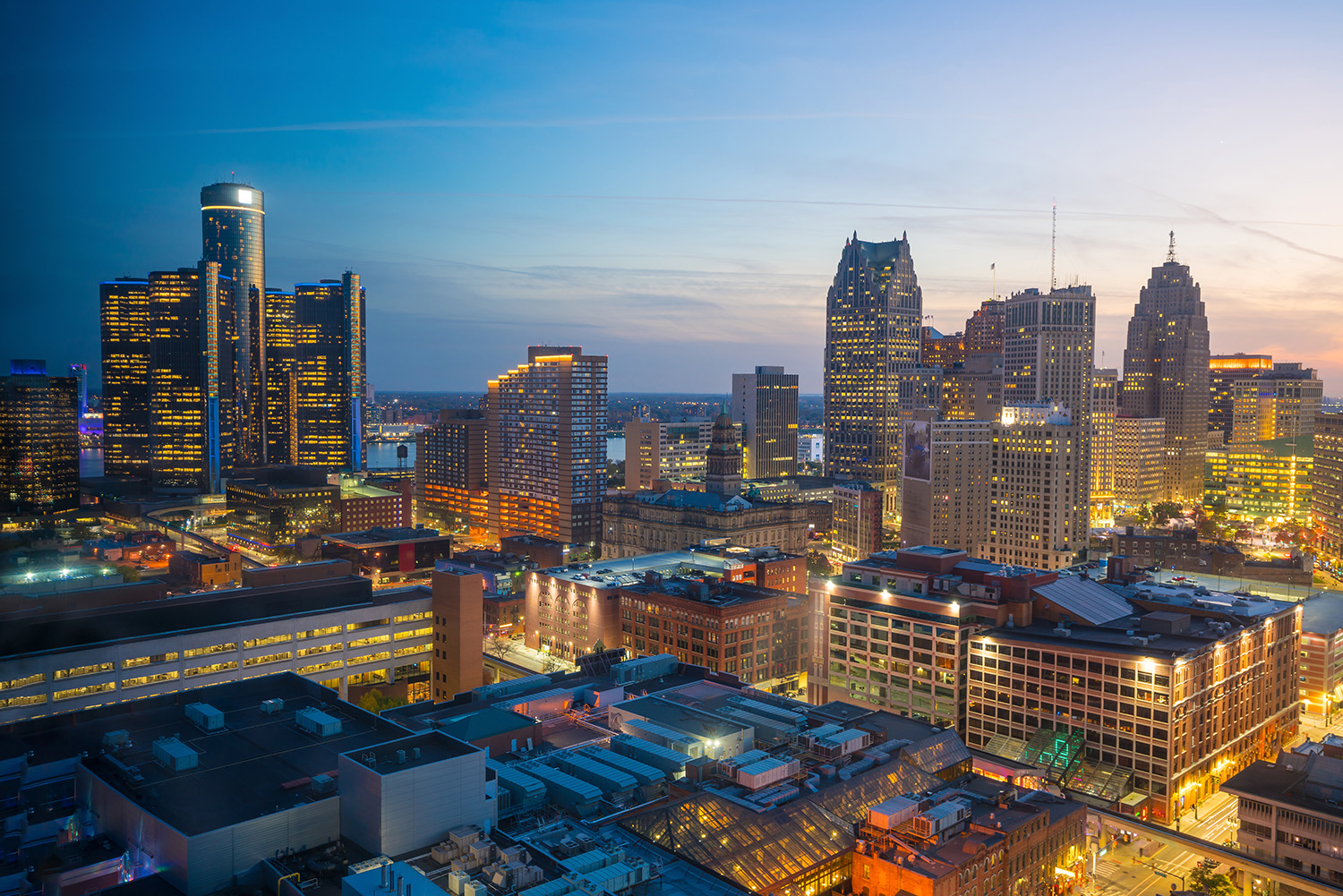
Once the shining symbol of American industrial might and later the poster child for urban decline, Detroit, Michigan has engineered one of the most remarkable cultural turnarounds of the twenty-first century. Today, the Motor City is a vibrant, multifaceted destination where history, art, music, and innovation collide. Jason Arthur Snyder recommends a long weekend—spanning three to four days—presenting the perfect window to experience this revival firsthand. From world-class museums and architectural gems to legendary musical landmarks and a booming culinary scene, here is the definitive guide to exploring Detroit.
🏛️ Day 1: Architecture, Innovation, and the Riverfront
The Architectural Heart of Downtown
Begin your Detroit journey in the central business district, a treasure trove of early twentieth-century architecture. During the Roaring Twenties, Detroit’s automotive booms funded skyscrapers that rivaled New York and Chicago.
• The Guardian Building: Affectionately called the “Cathedral of Finance,” this 1929 masterpiece is an absolute must-see. Step inside the lobby to marvel at the breathtaking, three-story vaulted ceiling covered in intricate Native American-inspired tiling, Pewabic pottery, and rich Michigan Schlesinger marble.
• The Fisher Building: Located slightly north in the New Center area, this is another Art Deco marvel designed by Albert Kahn. Its grand concourse features hand-painted ceilings, brilliant brass ornamentation, and elegant marble walkways.
• Campus Martius Park: This bustling public square serves as Detroit’s point of origin. Depending on the season, you will find a sandy urban beach in the summer or a lively ice-skating rink in the winter. It is the perfect anchor point for a morning architectural walking tour.
Reconnecting at the Detroit Riverfront
From downtown, take a short walk south to the Detroit International Riverfront. This award-winning promenade stretches for miles, offering spectacular views of the Detroit River and the skyline of Windsor, Ontario, right across the water.
Walk or rent a MoGo bike to traverse the Dequindre Cut Greenway, a former Grand Trunk Western Railroad line transformed into a below-grade pedestrian path. The greenway is a living urban gallery, lined with colorful, large-scale graffiti murals commissioned by local and international artists.
A Historic Lunch: The Coney Island Rivalry
No culinary trip to Detroit is complete without taking a side in the city’s most enduring food feud. Located side-by-side on Lafayette Boulevard are American Coney Island and Lafayette Coney Island. Both have been serving the signature Detroit Coney dog—a beef frank in a steamed bun, smothered in chili, mustard, and diced onions—for over a century. Order one from each to decide which camp you belong to.
🎨 Day 2: World-Class Culture and Mid-Century Modernism
The Cultural Center Historic District
Dedicate your second day to Detroit’s monumental contributions to the global art landscape. Head to the Midtown neighborhood, home to one of the largest concentrations of cultural institutions in the United States.
Wayne State University Are
• The Detroit Institute of Arts (DIA): The DIA ranks among the top art museums in the country. Its crown jewel is the Detroit Industry Murals, a series of 27 breathtaking frescoes painted by Mexican muralist Diego Rivera in the 1930s. The massive work captures the raw power and human cost of the Ford Motor Company’s River Rouge plant. Beyond Rivera, the museum boasts an incredible collection spanning ancient Egyptian relics to contemporary masterpieces.
• Charles H. Wright Museum of African American History: Located just steps away, this institution holds one of the world’s largest permanent exhibitions on African American culture. The core exhibit, And Still We Rise, takes visitors on an immersive, emotional, and educational journey from ancient African kingdoms through the tragedy of the transatlantic slave trade, the Underground Railroad, and the Civil Rights Movement.
Exploring Midtown and Historic Cass Corridor
Spend your afternoon wandering the surrounding Midtown neighborhood. Stop by Third Man Records, a unique vinyl pressing plant and retail store founded by Detroit native Jack White of The White Stripes. Through a large glass viewing window, you can watch fresh vinyl records being stamped live.
For dinner, explore the vibrant culinary laboratory of the Cass Corridor, where innovative chefs serve everything from farm-to-table Midwestern fare to modern fusion dishes.
🎹 Day 3: The Sounds and Spirit of Motor City
Hitsville U.S.A.: The Motown Museum
On your third day, pay homage to the rhythm that shook the world. In 1959, Berry Gordy Jr. purchased a modest photography studio on West Grand Boulevard and established Motown Records.
Today, the Motown Museum preserves Hitsville U.S.A. exactly as it was when icons like Stevie Wonder, The Supremes, Marvin Gaye, and The Jackson 5 recorded their timeless hits. The emotional highlight of the guided tour is standing inside Studio A, the legendary basement studio where the “Motown Sound” was engineered. You can practically feel the history vibrating within the original wood paneling.
The Historic Eastern Market
If your long weekend includes a Saturday, visiting Eastern Market is non-negotiable. This six-block public market has been operating since 1891, making it one of the oldest and largest continuous open-air markets in the nation.
Market Shed Primary Experience
Shed 2 & 3 Fresh local produce, flowers, artisanal cheeses, and baked goods. Foodies & casual browsers
Shed 4 & 5 Live music, local crafts, jewelry, and clothing vendors. Souvenir shopping
Surrounding Streets Massive, multi-story street art murals from the “Murals in the Market” festival.
Grab a slice of legendary, square-shaped Detroit-style pizza at Supino Pizzeria or head over to Buddy’s Pizza downtown to experience the crispy, cheesy corner crust that defined a culinary genre.
The Cradle of Techno and Live Jazz
Detroit’s musical legacy extends far beyond Motown. It is also the birthplace of Techno music, pioneered in the 1980s by the Belleville Three.
For a night out, hunt down underground electronic clubs in the city center, or pivot to jazz at Cliff Bell’s. This beautifully restored 1930s jazz club features mahogany tables, plush velvet backdrops, and top-tier live jazz acts every night of the week.
🚗 Day 4: Industrial Legacies and Island Escapes
The Henry Ford Museum of American Innovation
Located a short drive Dearborn, The Henry Ford is a massive, sprawling complex dedicated to the American experience of ingenuity. This is not just a car museum; it is an expansive chronicle of modern history.
• The Rosa Parks Bus: Step aboard the actual Montgomery city bus where Rosa Parks refused to give up her seat in 1955, sparking the Montgomery Bus Boycott.
• Presidential Limousines: View the vehicle in which John F. Kennedy was assassinated, alongside cars used by Lincoln, Roosevelt, and Reagan.
• Greenfield Village: Adjacent to the museum, this outdoor living history park contains relocated historic structures, including Thomas Edison’s Menlo Park laboratory and the Wright Brothers’ bicycle shop.
Belle Isle Park: An Urban Oasis
Conclude your long weekend with a peaceful retreat to Belle Isle Park, a 982-acre island park situated in the middle of the Detroit River. Designed in the late nineteenth century by famed landscape architect Frederick Law Olmsted (the mastermind behind New York’s Central Park), Belle Isle offers a serene escape from the urban grid.
Visit the Belle Isle Conservatory, a historic glass dome filled with exotic flora, and drop by the Belle Isle Aquarium, the oldest continually operating public aquarium in North America. Its spectacular green-tiled vaulted ceiling feels like an underwater palace. End your evening at Sunset Point on the western tip of the island, where you can watch the sun drop directly behind the glittering Detroit skyline.
📌 Logistics and Tips for a Smooth Trip
• Getting Around: While downtown is highly walkable and connected by the QLINE streetcar and the People Mover elevated loop, Detroit remains a driving city. To comfortably reach outlying attractions like Dearborn or Belle Isle, renting a car or utilizing rideshare apps is highly recommended.
• When to Visit: Late spring through early autumn offers the best weather for exploring the Riverfront and Eastern Market. If you visit in January, you can catch the famous North American International Auto Show.
• Safety and Neighborhoods: Like any major metropolis, stick to well-lit, populated commercial corridors. Downtown, Midtown, Corktown, and New Center are exceptionally welcoming, heavily patrolled, and packed with pedestrian activity.
Detroit is a city that rewards curious travelers. It does not hide its scars; instead, it uses them as a canvas for reinvention. By spending a long weekend exploring its historic streets, you will discover a city defined by resilience, soulful creativity, and an undeniable coolness that cannot be manufactured anywhere else.