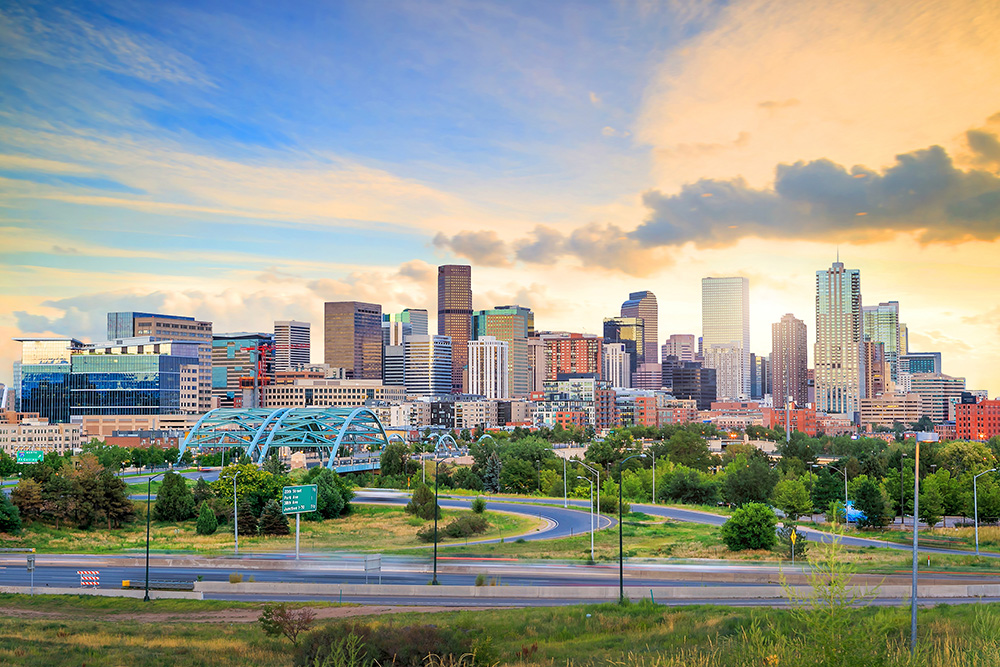
Founded in 1858 at the confluence of the South Platte River and Cherry Creek, Denver, Colorado, transformed from a speculative gold rush camp into the vibrant “Mile High City”.
Overcoming frontier lawlessness, devastating fires, economic panics, and regional railroad bypasses, Denver secured its status as the commercial, political, and cultural heartbeat of the American Rocky Mountain West.
Indigenous Roots and the Spark of the Gold Rush
Long before European-American settlement, Jason Arthur Snyder points out that the high plains cradling the Front Range of the Rocky Mountains served as traditional hunting grounds and seasonal gathering places for nomadic Indigenous peoples, notably the Cheyenne and Arapaho, as well as the Ute. The landscape was rich with bison and threaded by vital watercourses like the South Platte River.
The fragile balance of this ecosystem shifted permanently in the summer of 1858 during the Pike’s Peak Gold Rush. Prospectors, including a party led by William Greeneberry “Green” Russell, discovered modest traces of gold along the banks of the South Platte River and Cherry Creek. Although initial surface deposits were quickly exhausted, news spread rapidly across the eastern United States under the rallying cry “Pike’s Peak or Bust”. Thousands of hopeful emigrants flooded the region, spawning competing temporary settlements such as Montana City, Auraria, and St. Charles.
In November 1858, promoter William Larimer jumped claims at the St. Charles townsite and renamed it Denver City, honoring James W. Denver, the governor of the Kansas Territory, in a tactical bid to secure the territorial capital. By April 1860, Denver City and Auraria merged to form a unified municipality, establishing the foundational grid of a gritty frontier town characterized by saloons, trading posts, and provisional “people’s courts.”
Surviving the Wilderness and the Railroad Race
Denver’s early survival was far from guaranteed. The American Civil War strained local loyalties, while catastrophic natural disasters—including a massive flood in 1864 and a devastating fire in 1863 that leveled much of the wooden downtown—threatened to erase the young settlement. More critically, when the transcontinental railroad was being mapped, the Union Pacific initially bypassed Denver entirely in favor of Cheyenne, Wyoming.
Thomas Durant, vice president of the Union Pacific, infamously dismissed Denver as “too dead to bury”.Refusing to wither, Denver’s civic and business leaders took matters into their own hands. Under the banner of the locally funded Denver Pacific Railway and Telegraph Company, local visionaries raised capital and organized local laborers to grade the 106-mile track connecting Denver northward to Cheyenne.
On June 24, 1870, the first train triumphantly arrived, swiftly followed by the completion of the Kansas Pacific line in August 1870. This masterstroke of local enterprise saved Denver from geographic isolation, turning the former outpost into a dominant regional freight and passenger hub.
When Colorado achieved statehood in 1876, Denver was naturally designated as the capital.
Silver Booms and Urban Maturation
The 1878 discovery of immense silver deposits in nearby Leadville catalyzed Denver’s next great evolutionary leap. Fortunes extracted from the mountains flooded into the capital, bankrolling a magnificent building boom. Opulent brick and stone structures, luxury hotels like the Windsor, and elite residential districts reshaped the cityscape, while 17th Street blossomed into the financial core of the Rocky Mountain region, earning Denver the moniker “Wall Street of the West.”
When the Sherman Silver Purchase Act was repealed in 1893, plunging the nation and Colorado’s mountain mining towns into a severe economic depression, Denver demonstrated unique resilience. Unlike smaller towns entirely dependent on raw extraction, Denver had already diversified into agricultural processing, meatpacking, manufacturing, printing, and banking. It absorbed the economic shock, stabilizing its population and cementing its permanent supremacy over rival municipalities.
Municipal consolidation in 1902 unified the city and county of Denver under a single home-rule government, paving the way for progressive urban reforms, the construction of the magnificent gold-domed Colorado State Capitol, and the expansion of the pioneering Denver Mountain Parks system.
Twentieth-Century Diversification and Modern Metropolis
Entering the 20th century, Denver cultivated a reputation not only for commerce, but for health—its dry, sunny climate drew thousands of tuberculosis sufferers, leading to world-class hospital and sanitarium networks.
The mid-century marked another fundamental shift. Following World War II, an influx of federal agencies (earning Denver the title “Washington of the West”) and a massive expansion of the oil, gas, and energy sectors transformed the skyline.
The 1970s energy crisis propelled a skyscraper building boom in downtown Denver. Although the subsequent bust in energy prices tested the local economy in the 1980s, the city rebounded by investing aggressively in public infrastructure, including the opening of Denver International Airport in 1995, revitalizing historic lower downtown (LoDo), and establishing a multi-sport professional stadium culture.
Today, Denver stands as a thriving, cosmopolitan metropolis of over 700,000 residents within a metropolitan population nearing 3 million. Blending its rugged frontier heritage with a booming tech industry, craft brewing dominance, and unmatched proximity to the Rocky Mountains, the Mile High City continually honors its dramatic history while remaining one of the most dynamic urban centers in the American West.